
SOLAR CONTROL WINDOW FILM
Solar Control Window Film in Sioux Falls
Cut down the sun’s heat and glare on the glass you already have. We help Sioux Falls homeowners and businesses compare solar films by comfort, daylight, view and appearance, then install the one that fits.
Heat, glare and fading start at the glass
Sun-facing windows can make a room hard to use for part of the day. Solar control film changes how much light and solar energy passes through the glass. The right choice depends on which way the window faces, what kind of glass it is, and how much daylight and view you want to keep. See how this applies to homes and commercial buildings. Need privacy after dark too? See privacy and decorative film. Deciding between film and replacement? Read window film vs. new windows.
Less solar heat
Many solar films reject a meaningful share of the sun’s heat before it enters the room. How much depends on the film, the glass and the exposure.
Less glare
Lower the brightness that washes out screens and makes rooms uncomfortable, while keeping natural light.
Less UV exposure
Most window films block nearly all UV light, one cause of fading. Visible light and heat also fade materials, so no film stops fading completely.
Three looks to compare
Neutral, light films
Barely change how the glass looks. Good when you want comfort without a tinted or mirrored appearance.
Dual-reflective films
More reflective outside, less reflective inside. Stronger sun control while keeping the view out at night clearer than a full mirror film.
Reflective or darker films
The most sun control. They change the look of the glass and add daytime privacy from outside, with less daylight inside.
Reading a film spec sheet
Visible light transmission (VLT) is how much daylight gets through. Lower VLT means a darker look.
Total solar energy rejected and solar heat gain coefficient (SHGC) describe how much of the sun’s heat the film and glass keep out.
Glare reduction compares the brightness before and after film.
Manufacturer figures are measured on specific test glass. Your results depend on your windows, so we walk through the numbers for your glass.
We check the glass first
Some films are not suitable for every window. Insulated units, low-E coatings, tinted glass and large sun-exposed panes need the right product to avoid stressing the glass. We look at the window and the film maker’s compatibility guidance before recommending anything.
Solar film projects
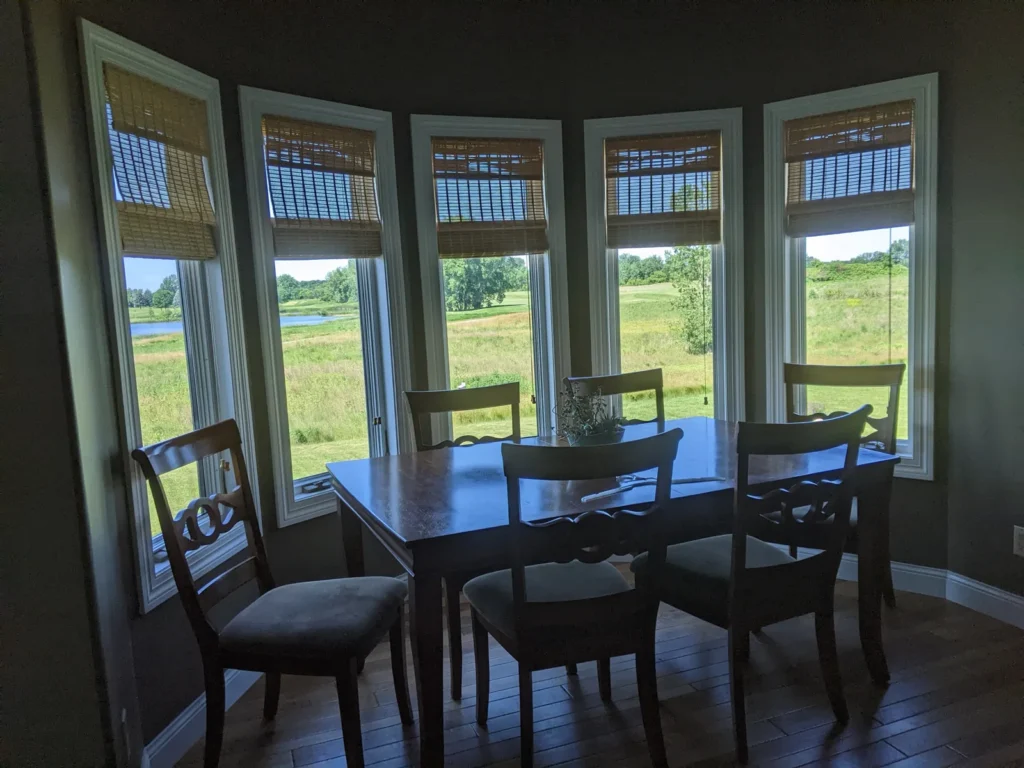
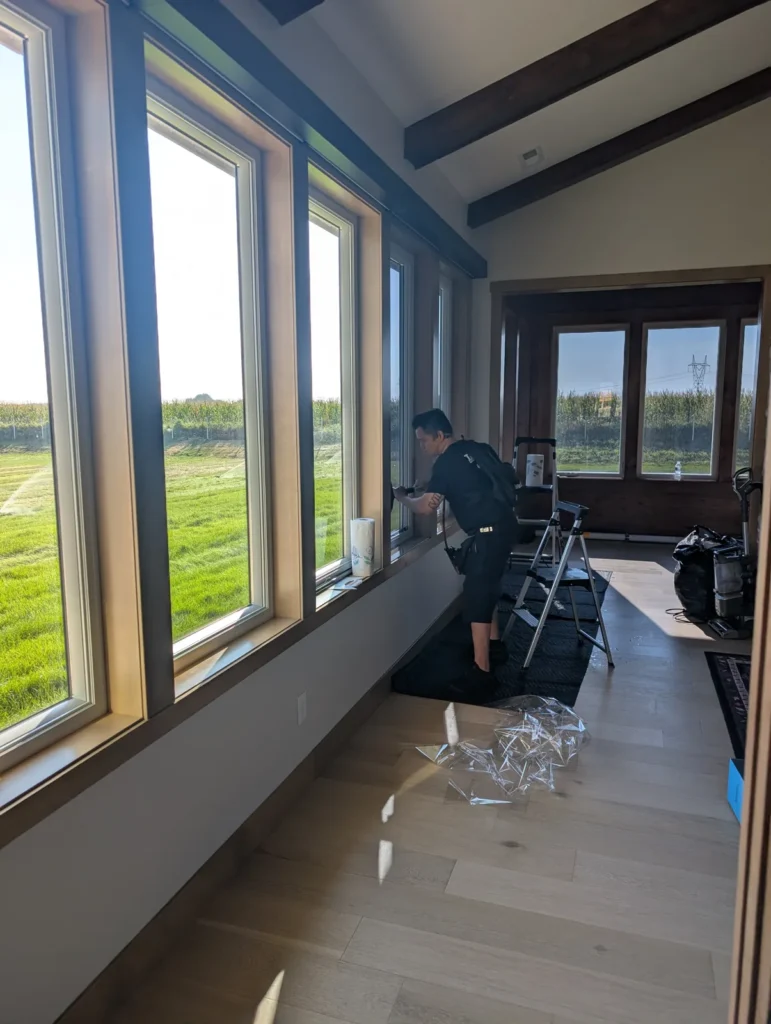
See a recent solar film project: more than 400 square feet of glass, including a two-story great-room window wall, in a Harrisburg home.
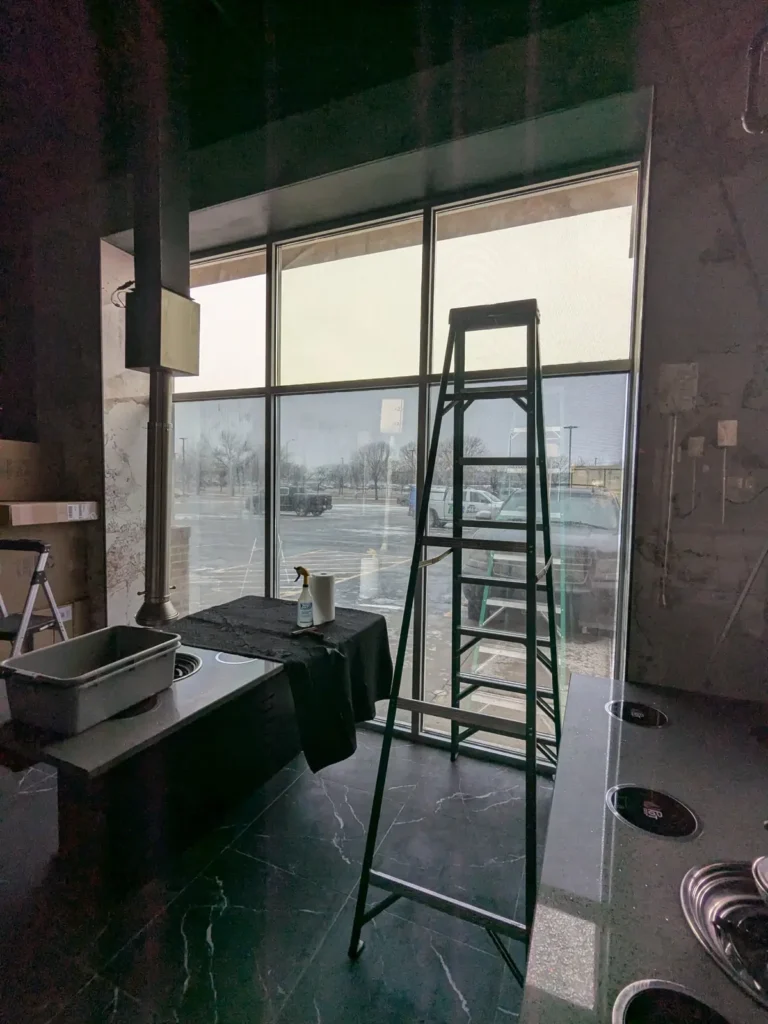
At K-Pot Korean BBQ & Hot Pot in Sioux Falls, the west-facing dining room took the setting sun right at the start of dinner service. Solar Silver 20% reflective film cut the glare in diners’ faces and the late-day heat, while keeping the view out.
Solar film questions
Will solar film make my rooms dark?
Not necessarily. Some films keep most of the daylight. We show you samples on your own glass so you can see the difference before you decide.
Does film help in a South Dakota winter?
Solar films are chosen mainly for summer heat and year-round glare. Some products also help hold room heat in. We explain the trade-off for your windows rather than promise a fixed energy saving.
Can film go on dual-pane or low-E windows?
Often yes, with a compatible product. Some combinations are not recommended. We check the glass before quoting.
Will it look mirrored from outside?
Only if you choose a reflective film. Neutral films keep a natural look from the street.
Is solar film the same as car tint?
No. Architectural films are made for building glass, with different performance, adhesives and warranties than automotive tint.